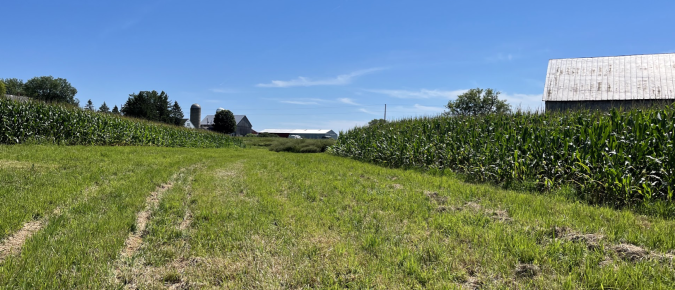
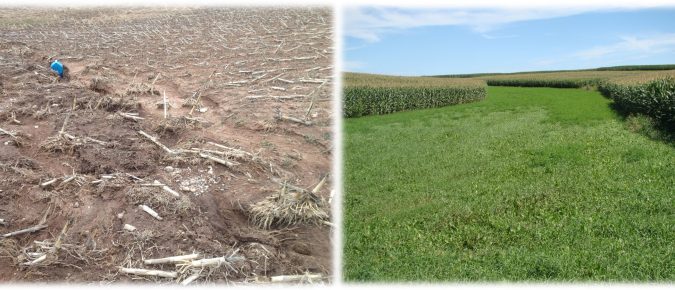
Grassed waterways play a critical role on the landscape by stabilizing areas of concentrated water flow. If grassed waterways are installed properly and have an adequate grass cover, they can significantly reduce sediment and nutrient losses. The roots of the growing grass help to keep sediment and nutrients in place. The grassed waterway helps to catch soil particles carried in runoff as it concentrates and leaves the field.
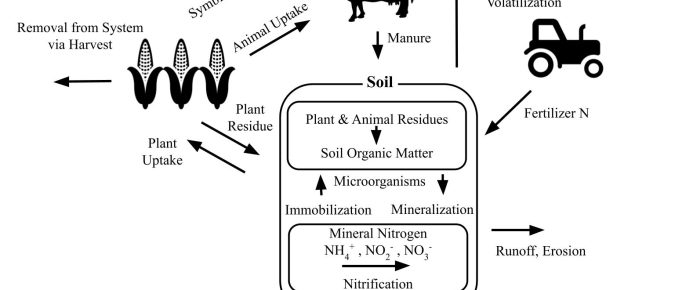
The fate of N is highly affected by on-farm factors such as cropping system, management practices, soil type and hydrology, as well as external factors such as weather conditions. There are many pathways for N loss from a cropping system including:
According to the USDA Census of Agriculture, from 2007 to 2017, the amount of commercial phosphorus (P) fertilizer applied, and manure P generated, continued to increase in many states including Wisconsin; at the same time, farm acreage is shrinking. Over application of P contributes to both economic inefficiencies and environmental concerns, including harmful algal blooms and eutrophication of waterbodies.
Tile drains play an important role in Wisconsin’s agricultural production systems. Regular maintenance of tile drains is an important management practice to ensure agricultural productivity on tile-drained land in Wisconsin.
This collection of essays represents the opinions of different authors and provides a framework for the presentation of varying points of view about water and agriculture-related issues in Central Wisconsin.