This article highlights how cover crops impact phosphorus loss dynamics, including 1) soil and water movement and 2) placement and forms of phosphorus within the soil. Ultimately, situations where cover crops will have the largest impact on total phosphorus loss will be discussed to help farmers and conservation professionals maximize impact.
This article includes 1) impacts of climate change in spring in Wisconsin, 2) the consequences of climate change with a focus on phosphorus, and 3) practices to increase farm resilience in the face of rapidly changing weather in spring.
Chelsea Zegler and Dr. Jamie Patton continue their conversation from last year on how soil test phosphorus (STP) impacts water quality. Learn how different cover crops and soil health practices change water dynamics, the location and the availability of phosphorus in different soil types.
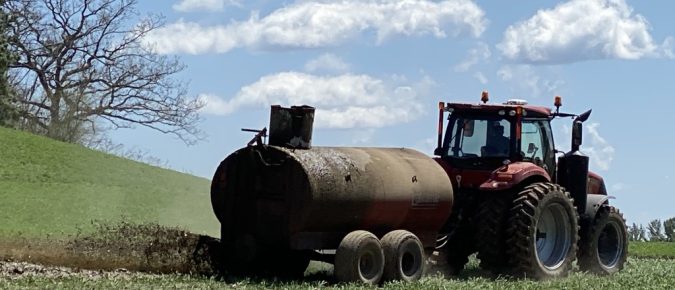
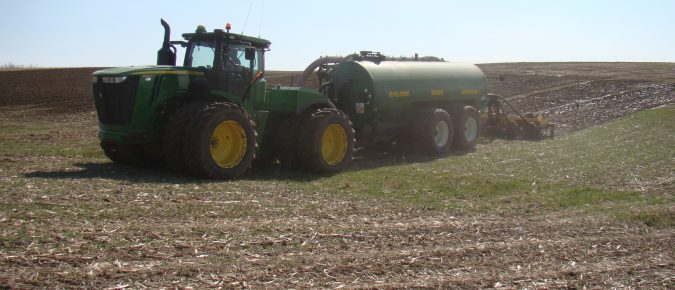
A common misconception about livestock manure is that it is simply a waste product of the farm. However, manure is rich in many nutrients and is a valuable resource when applied back onto fields that can benefit from manure application. Research has demonstrated positive impacts to soil quality/health, crop production, and overall farm management when manure is managed effectively.
The use of tile drainage is becoming more popular in Wisconsin. Installing a tile drain system can be a great tool to dry soil out faster, improving the timeliness of field operations throughout the cropping season. However, how do tile systems influence water movement off of the field, and what are the water quality implications?
Guolong Liang, outreach specialist for the Agriculture Water Quality Program of Extension in the Central Sands of Wisconsin, guest hosts this episode of Field Notes. Guolong talks with UW-Madison Horticulture Professor and Extension Specialist Jed Colquhoun about the use of cover crops to reduce nutrient runoff in canning and processing vegetables. For the farmer perspective, he chats with John Ruzicka of Guth Farms in Bancroft, Wisconsin and Dylan Moore, a Seneca Foods Field Representative, about Guth Farm’s journey in integrating no-till and cover crops into their processing vegetable rotations.
Historically, reduced tillage, defined here as tillage that maintains plant surface residue and where nutrients are surface applied (i.e. no-till, zone, strip, or vertical tillage), were touted as the solution for phosphorus loss from agricultural fields.
Amber Radatz, program director for UW-Madison Extension’s Ag water quality program, talks about the positive impacts utilizing multiple best management practices can have on a landscape. It typically takes more than just one conservation practice to make a significant impact. The ultimate goal is to keep soil and nutrients on the field rather than erode […]
This short video shares the best times to spread manure throughout the year, why it’s important to consider various field and weather conditions and offers best management practices to install to reduce soil and nutrient losses.
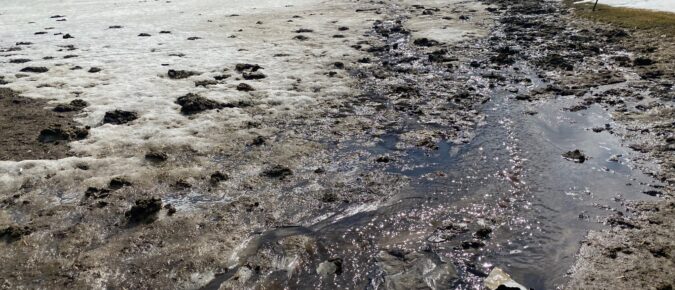
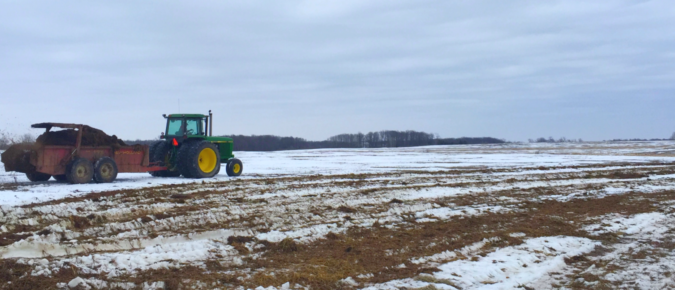
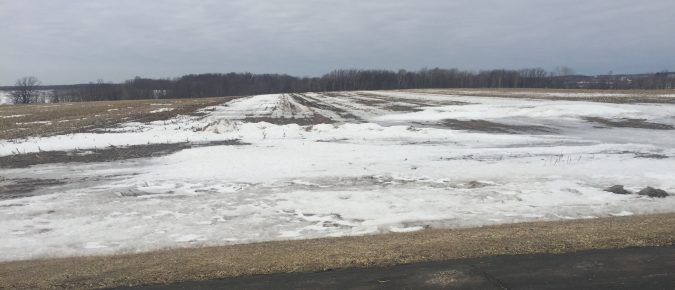
Over the years, the University of Wisconsin Division of Extension Discovery Farms Program has shared lessons learned from nutrient applications on frozen soil. The main takeaway is that applying nutrients, such as manure, to frozen ground shortly before runoff occurs leads to greater losses.
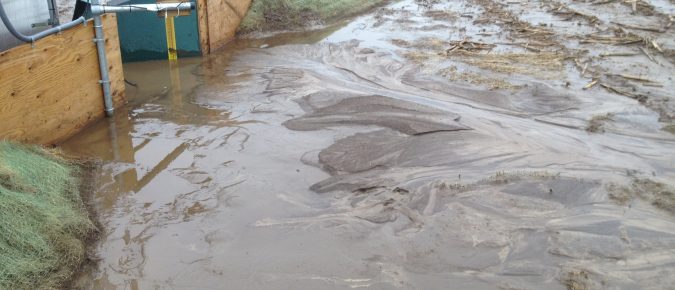
Phosphorus is a vital macronutrient for crop production, a major contributor to aquatic degradation, and a finite global resource and thus is important agronomically, environmentally, and economically. Phosphorus loss to water resources happens in every agricultural production system. Fortunately, there are management options that decrease the risk and amount of phosphorus loss to water resources without sacrificing farm profitability.
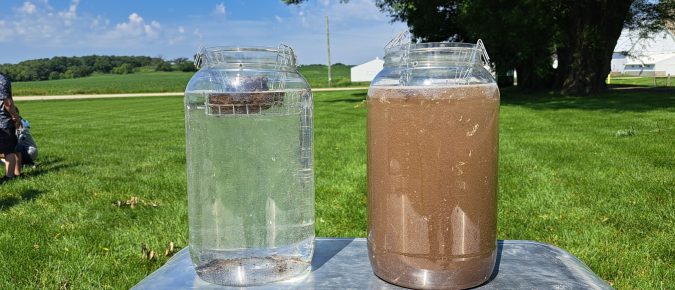
As the quantity and quality of on-farm data increase over time, the understanding of how agriculture impacts water quality has evolved. As research and monitoring technology has progressed, the scientific community is looking at more than runoff and soil loss, but rather, different forms of phosphorus (P). In the past, total P was discussed, but now is broken down into particulate P and dissolved P.