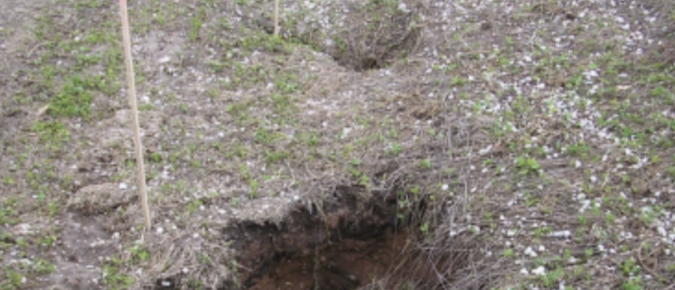
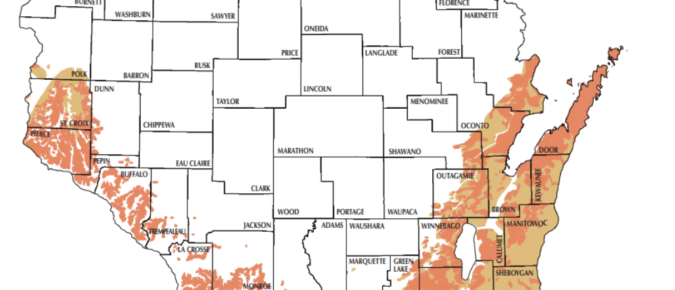
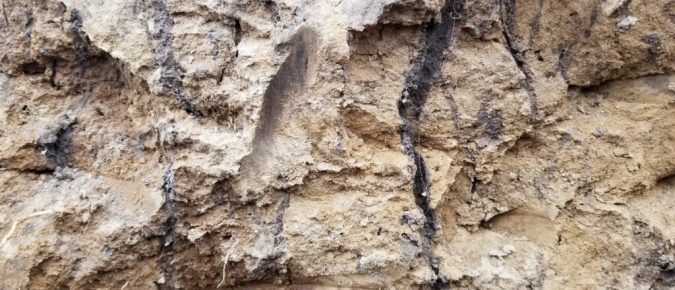
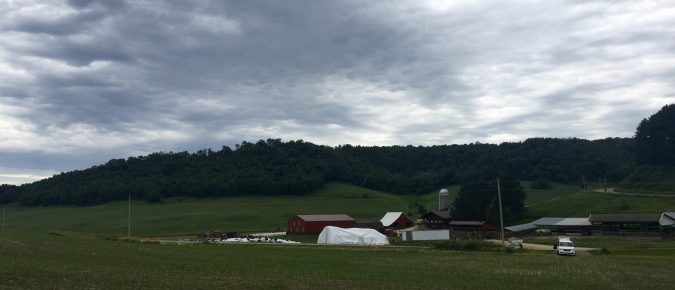
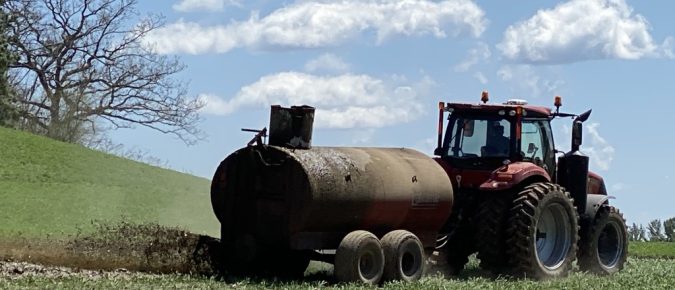
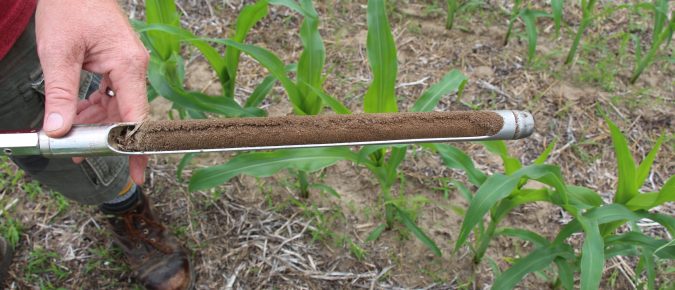
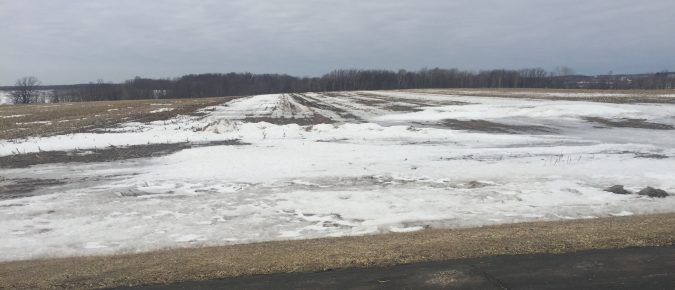
Karst topography and Silurian bedrock are areas that are more susceptible to water contamination due to shallow soils and increased number direct conduits to groundwater, such as sinkholes. When farming in these areas, and especially spreading manure, it is important to follow all rules and regulations.
Both karst and Silurian are terms related to geological features and formations that have had a significant impact on Wisconsin’s surface and subsurface geology and hydrology. Both Karst and Silurian bedrock are connected to sedimentary processes.
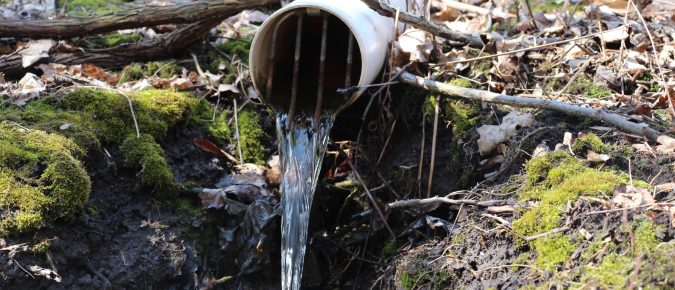
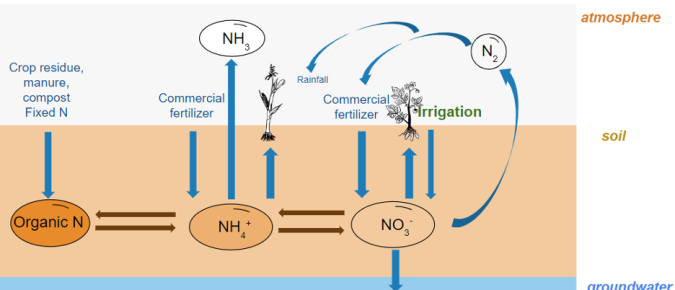
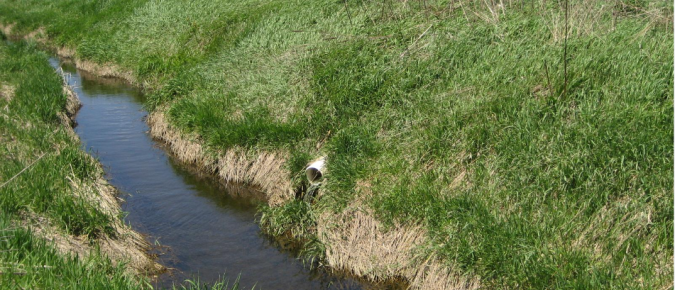
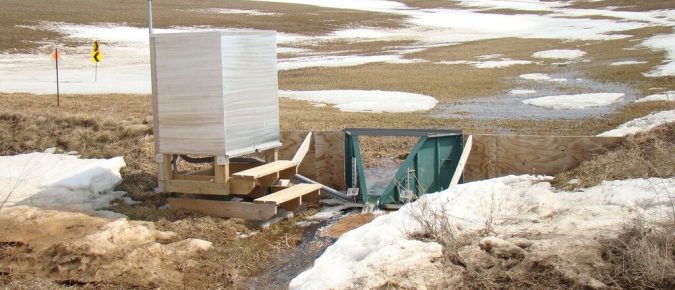
Because nitrate is negatively charged, it does not bind with negatively charged soil and readily moves with water. Typically nitrate losses are more prevalent in subsurface water like tile drainage, while high phosphorus and sediment losses are associated with surface waters. Although we do have highly accurate ways to measure tile drainage water quality, such as 24/7 automated flow samplers, this approach is typically not economically or logistically feasible for individuals looking to monitor tile drainage on their own farm.
In this article, we will discuss the presence of nitrate in irrigation water and opportunities to budget nitrogen in irrigation, to make farms more efficient in using nitrogen and reduce over-fertilization which in turn will protect groundwater.
The use of tile drainage is becoming more popular in Wisconsin. Installing a tile drain system can be a great tool to dry soil out faster, improving the timeliness of field operations throughout the cropping season. However, how do tile systems influence water movement off of the field, and what are the water quality implications?
Guolong Liang, outreach specialist for the Agriculture Water Quality Program of Extension in the Central Sands of Wisconsin, guest hosts this episode of Field Notes. Guolong talks with UW-Madison Horticulture Professor and Extension Specialist Jed Colquhoun about the use of cover crops to reduce nutrient runoff in canning and processing vegetables. For the farmer perspective, he chats with John Ruzicka of Guth Farms in Bancroft, Wisconsin and Dylan Moore, a Seneca Foods Field Representative, about Guth Farm’s journey in integrating no-till and cover crops into their processing vegetable rotations.
Historically, reduced tillage, defined here as tillage that maintains plant surface residue and where nutrients are surface applied (i.e. no-till, zone, strip, or vertical tillage), were touted as the solution for phosphorus loss from agricultural fields.
Nitrate loads to groundwater have increased statewide, with studies estimating that over 10% of private wells in Wisconsin exceed the health standard of 10 mg/L (Wisconsin Groundwater Council 2022). In areas with over 75% agricultural land use, the percentage of private wells exceeding the standard increases to 20%.
Amber Radatz, program director for UW-Madison Extension’s Ag water quality program, talks about the positive impacts utilizing multiple best management practices can have on a landscape. It typically takes more than just one conservation practice to make a significant impact. The ultimate goal is to keep soil and nutrients on the field rather than erode […]
This short video shares the best times to spread manure throughout the year, why it’s important to consider various field and weather conditions and offers best management practices to install to reduce soil and nutrient losses.
This article was originally published in The Journal of Nutrient Management Discovery Farms’ Nitrogen Use Efficiency Project provides farmers and agronomists opportunities to evaluate their N management to determine the economic and environmental impacts of current practices. With five growing seasons of data collection and 300 fields in our database, we have established benchmarks for […]
Over the years, the University of Wisconsin Division of Extension Discovery Farms Program has shared lessons learned from nutrient applications on frozen soil. The main takeaway is that applying nutrients, such as manure, to frozen ground shortly before runoff occurs leads to greater losses.