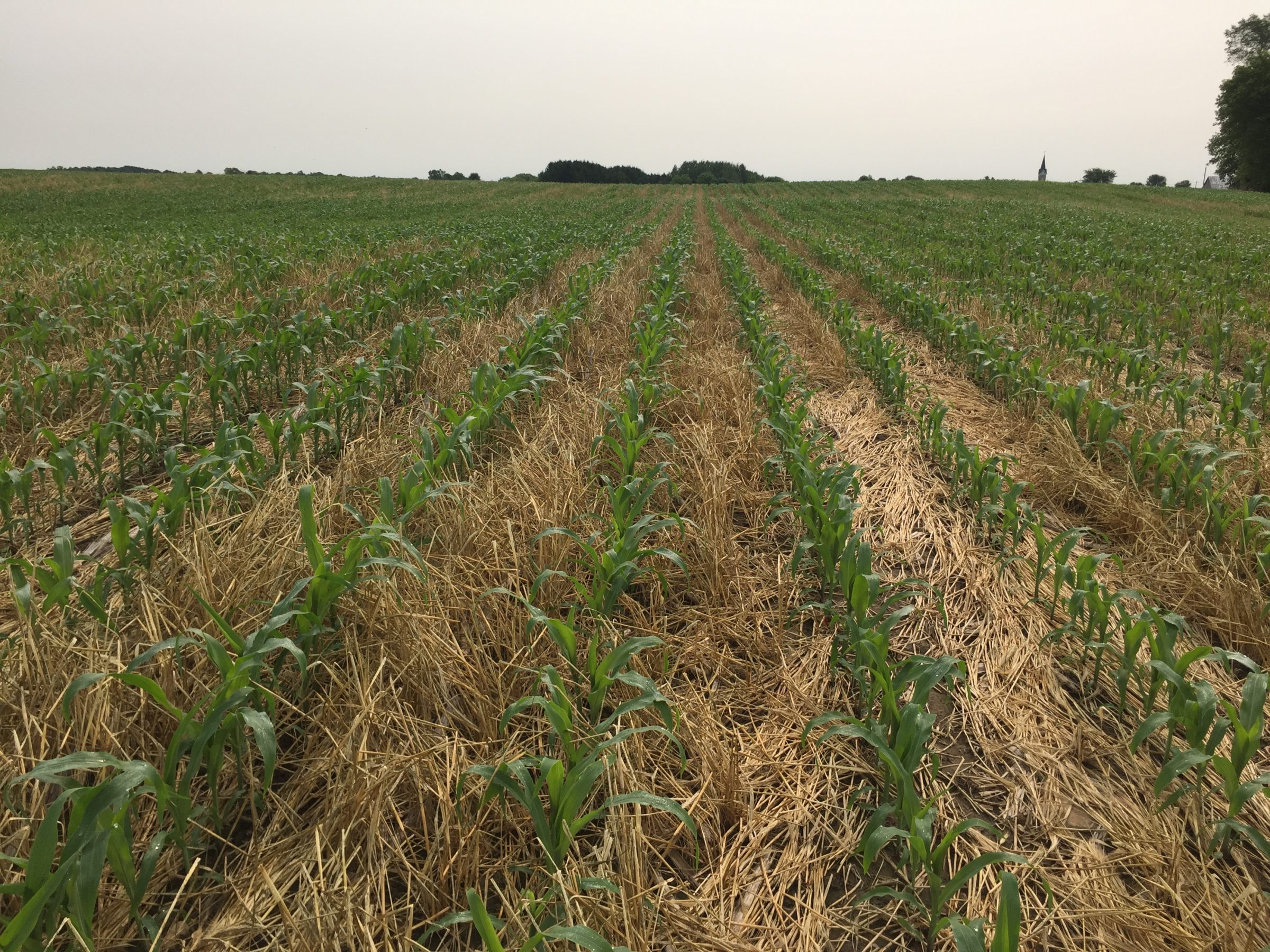
This article shares results from a Discovery Farms site study that was conducted in cooperation with USDA-NRCS.
There have been significant efforts to help understand how field management can improve Northeastern Wisconsin’s surface water issues from programs like Discovery Farms, part of the UW–Madison Extension Agriculture Water Quality Program, the Natural Resources Conservation Service, and Door Kewaunee Demonstration Farm Network with funding for the project from the Great Lakes Restoration Initiative. Since 2004, these programs have been working with farmers in Kewaunee County to better understand how practices like cover crops and no-tillage can help keep nutrients on fields and out of waterways, positively impacting water quality.
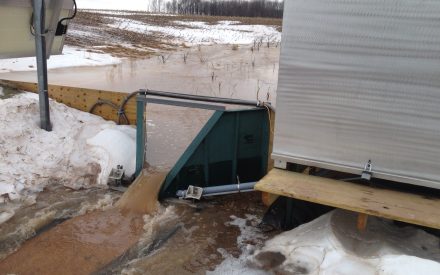
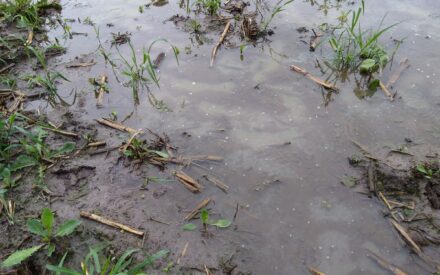
Discovery Farms conducted edge of field monitoring at a dairy farm in Kewaunee County from 2004-2008 (called “Farm A”). The program started monitoring fields at two more dairy farms in Kewaunee County in 2021, which continues today (Farms “B” and “C”). All three farms are large dairies and all the study fields receive dairy manure applications. Water runoff is collected throughout the year at monitoring stations and samples are sent to a laboratory to test for sediment and nutrient concentrations. This allows us to calculate the amount of losses running off the fields throughout the year.
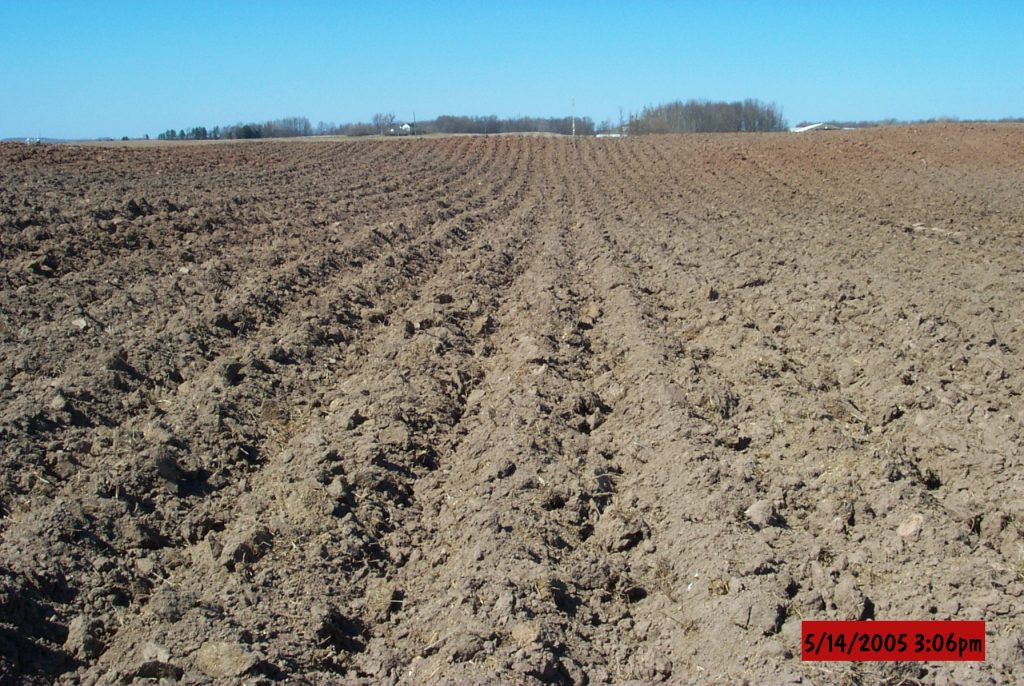
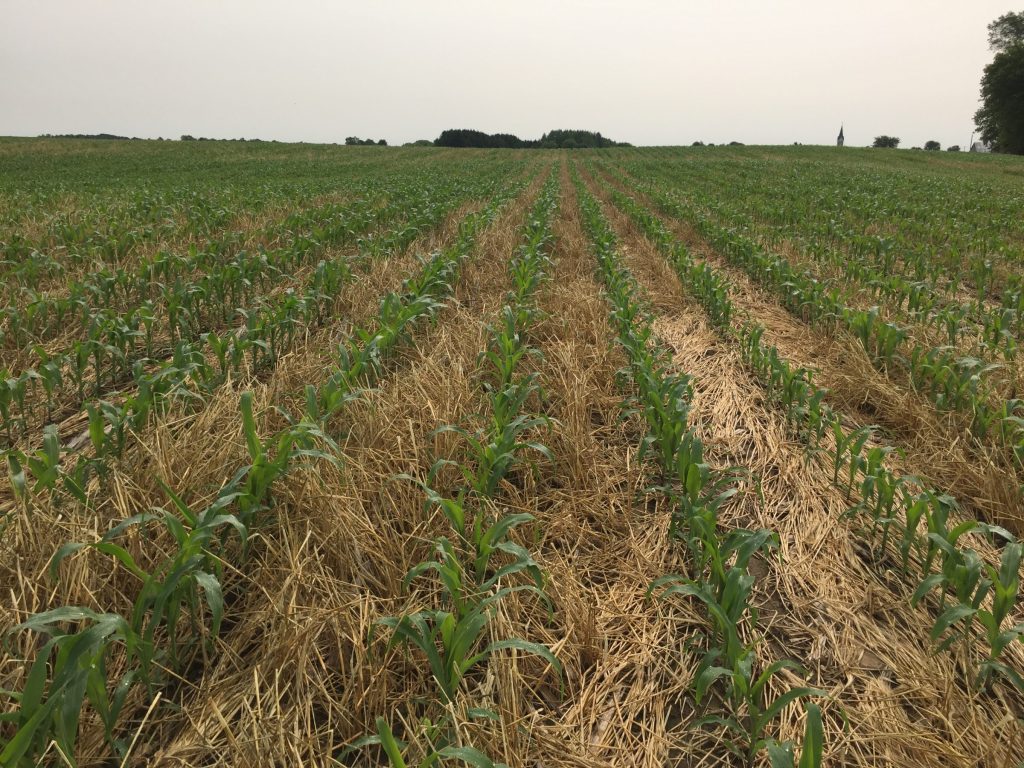
When monitoring started at Farm A, more intensive tillage was used (three passes) and there were no cover crops in their rotation. This was common management in the early 2000’s in the area. Today, Farms B and C use no-tillage and grow cover crops every year. No-tillage and cover crops are practices that are known to reduce sediment and nutrient losses, keeping them on the field and out of waterways.
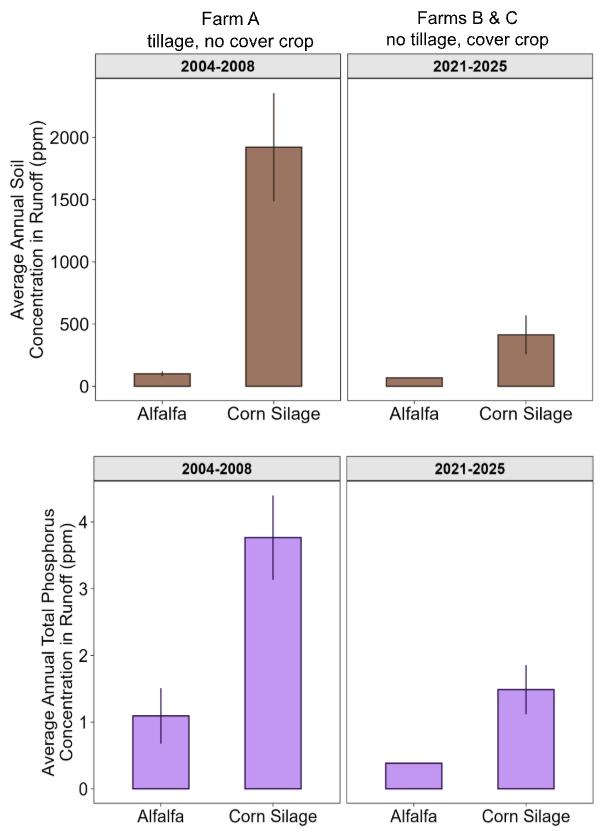
Figure 1 shows the average annual soil and total phosphorus losses that occurred on all fields when alfalfa or corn silage was being grown. Field A is shown on the left (2004-2008), with the losses from Farms B and C shown on the right (2021-2025).
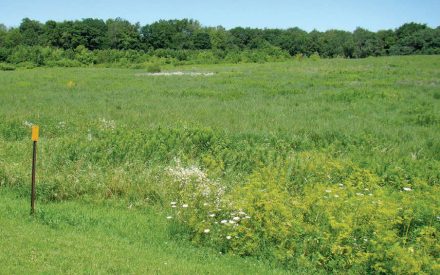
When trying to limit losses, keeping the soil covered as much as possible year round is key. The years that alfalfa was grown show lower losses compared to corn years on all the farms. Alfalfa is one type of perennial forage crop that keeps soil covered throughout the year. Cover crops are another way to protect the soil throughout the winter and spring months when soil is typically bare. No-tillage systems help to minimize soil disturbance, keeping soil in place, rather than it being washed away with runoff.
Figure 1 displays one indicator of progress for Kewaunee County and surrounding areas that have heavier, clay soils where water does not infiltrate as quickly as other soil types.
Comparing these fields shows that using no-tillage, adding a cover crop after corn silage, and incorporating a perennial forage crop into rotation can help reduce sediment and phosphorus losses, positively impacting water quality.
Published: May 7, 2026
Reviewed by: Amber Radatz, Todd Prill, Ellen Albright, and Aaron Wunderlin