This study was conducted from 2004-2007 and may no longer reflect current conditions as weather, management practices, and available data have evolved. This research remains valid, but should be considered alongside more recent findings.
Timing manure application is one of the most important decisions you can make to protect water quality on your farm. Research from the University of Wisconsin shows that soil moisture levels and rainfall intensity are two key factors that determine whether manure stays on your fields or runs off into nearby waterways.
What the Research Found
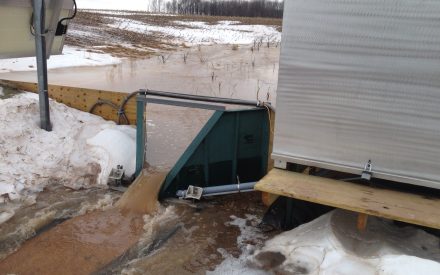
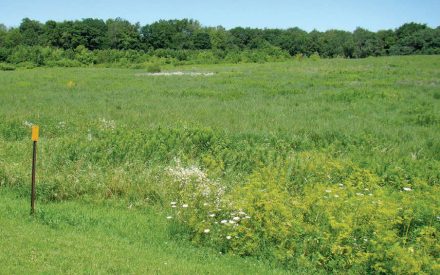
Scientists studied six small agricultural watersheds (ranging from 6 to 17 acres) at two southwestern Wisconsin farms from 2004 to 2007. One farm used a direct-plant system (no-till) with a corn-soybean rotation. The other used a chisel plow and soil finisher with a corn-oat-alfalfa rotation. Researchers tracked rainfall, soil moisture, and surface runoff continuously throughout the study period.
The big finding: there is a soil moisture tipping point. When volumetric soil moisture (the amount of water filling the spaces between soil particles) reached 0.39 cm³/cm³, roughly 80% of total pore space, runoff increased sharply. Below that level, runoff was nearly zero. Above it, runoff climbed quickly with each rainfall event. Although the two farms used very different farming systems, this tipping point was the same at both locations.
During the four-year study, storm events above this soil moisture threshold made up just 16% of total rainfall, but they produced 78% of all surface runoff. Put simply, most runoff happened during a small window of wet conditions.
Tillage and Residue Cover Matter Too
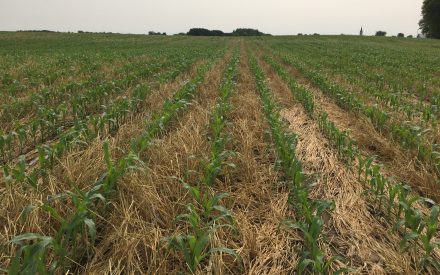
The no-till farm kept 55 to 60% residue cover on the soil surface, while the chisel plow farm had only 15 to 30% residue. Residue slows runoff by absorbing rainwater and protecting soil from compaction caused by raindrop impact. The no-till farm converted just 0.9% of rainfall to runoff, compared to 1.8% at the chisel plow farm. That difference adds up over time and matters for both soil health and water quality.
Rainfall Intensity Also Plays a Role
Rainfall intensity, specifically how much rain falls in a 30-minute window, also affects whether runoff occurs. When soils are already wet, even moderate rainfall can trigger runoff. When soils are drier, it takes a more intense storm to push water off the field. Crop canopy cover (the amount of the soil surface shaded by growing crops) had a stronger influence on this threshold when soils were in a middle moisture range.
What This Means for Your Operation
Checking soil moisture before spreading manure can meaningfully reduce the risk of runoff. The research shows that most water quality problems happen during short, wet stretches like May and June 2004 and August 2007 in this study. Avoiding applications when soils are near or above that 80% saturation point, and during periods when rain is in the forecast, is one of the most effective steps you can take. Soil moisture sensors are one tool that can help with this timing.
Explore This Study in More Detail
This resource is meant for print purposes, only.