This study was conducted from 2011-2017 and may no longer reflect current conditions as weather, management practices, and available data have evolved. This research remains valid, but should be considered alongside more recent findings.
You know your land better than anyone. But do you know exactly how much soil and phosphorus is leaving your fields during a rain event, or how much difference your tillage choices make from one year to the next? A seven-year study by Discovery Farms set up water quality monitoring stations at the edges of fields across two western Wisconsin watersheds to answer those exact questions with real numbers from real farms.
Where and How the Study Was Done
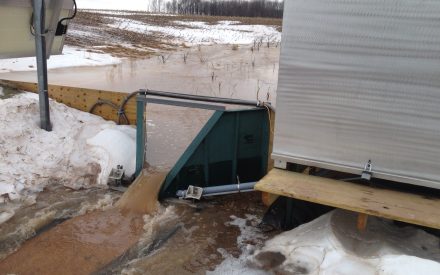
Researchers placed edge-of-field monitoring equipment at multiple farm sites in the Dry Run watershed in northwestern Wisconsin and the Jersey Valley watershed in the Driftless Area. Edge-of-field monitoring works by channeling all water that leaves a defined field area through a measuring device that tracks how much water runs off and automatically collects samples to test for soil, phosphorus, and nitrogen. Sites included grain farms, dairy farms, a grazed pasture, and three non-agricultural sites for comparison.
Four Lessons That Apply to Your Farm
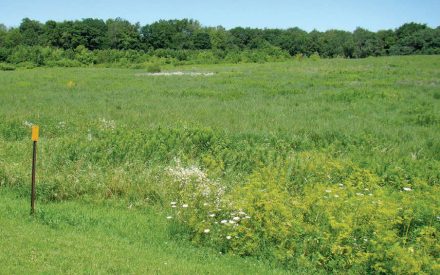
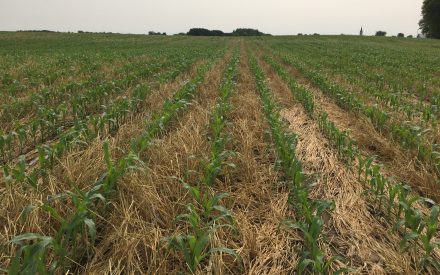
The first and most consistent finding was that no-till and pasture fields had far lower and more predictable soil losses than fields using tillage. The pasture and no-till sites averaged 4 to 10 times less soil loss than the tillage sites. The difference came down to year-round soil cover, less disturbance, and practices like contour strips and grassed waterways. One farmer in the study switched to no-till soybeans on steeper ground after seeing his monitoring results, and called it a significant improvement.
Second, reducing soil loss does not automatically solve phosphorus loss. Phosphorus comes in two forms: particulate phosphorus, which travels attached to soil particles, and dissolved phosphorus, which travels in water. No-till and pasture systems do a good job of keeping soil in place, but surface-applied manure and fertilizer that are never incorporated can build up phosphorus at the very top of the soil. That surface phosphorus then runs off in dissolved form whenever water moves across the field. Farmers at the no-till and pasture sites saw most of their phosphorus loss in dissolved form, although their total phosphorus losses remained low. Low-disturbance application methods that place manure or fertilizer below the soil surface can reduce risks of dissolved phosphorus losses. Incorporating nutrients below the surface can reduce that risk, though any action that increases soil disturbance brings its own tradeoffs.
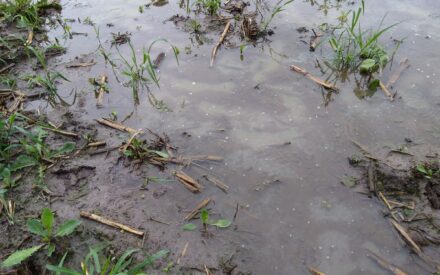
Third, some fields have soil and hydrology conditions that limit what management alone can fix. One site in the study, with poorly drained soils and a perched water table, had more runoff than any other Discovery Farms site ever recorded. Until the water in the soil profile is addressed, practices like cover crops or reduced tillage can only do so much.
Fourth, timing of fertilizer and manure applications matters as much as what you apply. Two runoff events at one site, both following fertilizer applications shortly before heavy June rain, produced the highest single-event dissolved phosphorus losses in the entire study. Nutrients that have not had time to bond with the soil are the most vulnerable to being carried away.
Explore This Topic in More Detail
This resource is meant for print purposes, only.
Edge-of-field Water Quality in Two Wisconsin Watersheds (PDF) ↗️