This study was conducted from 2005-2009 and may no longer reflect current conditions as weather, management practices, and available data have evolved. This research remains valid, but should be considered alongside more recent findings.
If you farm in eastern Wisconsin on heavy clay soils and apply manure regularly, this research suggests that tile drainage can be one of the ways phosphorus moves to nearby waters — and it may be worth taking a closer look at how much is leaving the field.
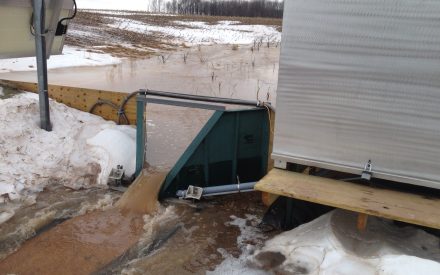
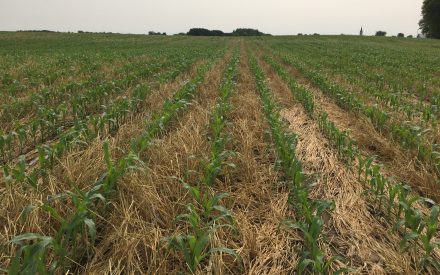
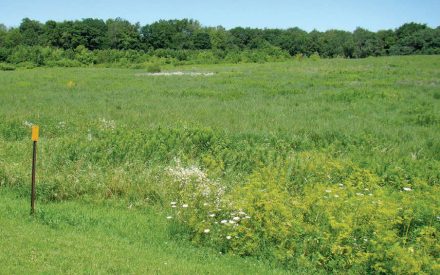
A study published in the Journal of Hydrology tracked phosphorus losses from surface runoff and tile drainage at four Eastern Wisconsin farm sites between 2005 and 2009. The farms were all working dairies participating in the Discovery Farms program. Researchers monitored two chisel-plowed continuous corn fields in Kewaunee County, one no-till corn and soybean field in Waukesha County, and one grazed pasture in Manitowoc County. All four sites had high to excessively high soil phosphorus levels and received regular manure applications.
Tile Drainage Dominated Water Movement
Across all four sites, tile drainage, not surface runoff, was the main pathway water left the field, accounting for 66 to 96 percent of total water leaving each site. That is a significant finding on its own. It means the majority of water moving off these fields is going underground first, and it is taking phosphorus with it.
Phosphorus Was Leaving Through Tile Lines
Tile drains contributed between 17 and 41 percent of total phosphorus loss across the four sites. The phosphorus concentrations measured in tile drainage at these sites were notably higher than what has been reported in similar studies from Illinois, Indiana, Minnesota, and Denmark. This matters because most conservation tools currently in use, such as vegetative buffers along streams, are designed to catch phosphorus attached to soil particles moving across the surface. Dissolved phosphorus moving through tile lines bypasses those buffers entirely. Buffers do very little to stop phosphorus that is already dissolved in water.
Manure Timing Was Not the Only Factor
One finding may surprise some farmers: a single manure application did not consistently cause an immediate spike in tile phosphorus concentrations. Across the four sites, increases following specific applications were observed only occasionally. The more important factor appeared to be the cumulative buildup of phosphorus in the soil over many years of regular manure application. That long-term saturation keeps soluble phosphorus available to move through the soil whenever water flows.
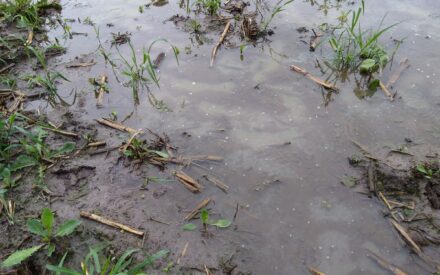
That said, one significant loss event did follow a spring manure application at the no-till site, where 2.5 inches of rain fell within four days of application and phosphorus concentrations in tile drainage spiked sharply.
What This Means for Your Farm
The study concludes that any phosphorus management strategy focused only on surface losses will miss roughly one-third of the total phosphorus leaving tiled fields in this region. Tile drainage losses need to be counted in field-level phosphorus budgets.
Explore This Study in More Detail
This resource is meant for print purposes, only.
Characterizing Phosphorus Dynamics in Tile-drained Agricultural Fields of Eastern Wisconsin (PDF) ↗️ (originally published in the Journal of Hydrology)