Soil loss is one of the biggest threats to long-term farm productivity and water quality. The good news? You already have the skills to catch it early. As a farmer, you make decisions every day based on what you see in your fields. The same approach works for conservation.
Discovery Farms spent years walking fields alongside Wisconsin farmers to identify where soil loss was happening and why. Trained staff conducted walkovers (visual assessments of erosion and erosion risk) on 15,000 acres across 60 farms. What they found was clear: most farmland was well-managed, but small problem areas were responsible for the largest share of soil loss.
When Is Your Farm Most at Risk?
Timing matters. More than 40% of annual runoff and over 80% of soil loss occurs in April, May, and June. That is the window when your fields are most exposed. The key question to ask yourself is: are my most vulnerable areas protected during those three months?
Soil type and soil moisture are the biggest drivers of runoff. Steep slopes, bare soil, and disturbed ground are where erosion starts. From there, water carries that soil off your land and into local waterways.
What to Look For
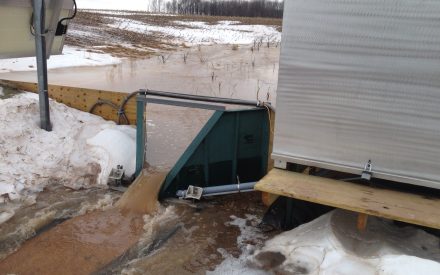
Walkovers identified four main problem areas: concentrated flow areas (where water gathers and rushes off the field), waterway outlets, widespread in-field erosion, and eroded streambanks.
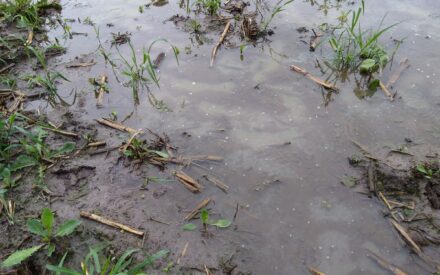
Signs that tillage may be too aggressive include a smooth, sealed soil surface, small channels forming across the field, crops that are washed out or buried, and corn stalks collecting at field edges. If you can see erosion happening, soil loss has likely already exceeded limits set in traditional conservation plans.
Practical Steps That Work
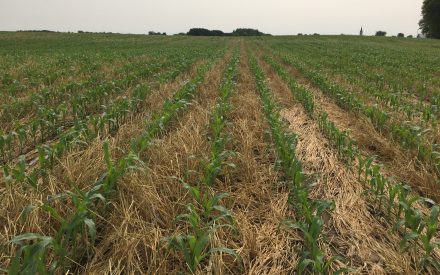
Research from Discovery Farms showed that reduced tillage, when paired with conservation practices, can nearly eliminate soil loss. No-till and reduced-till systems were especially effective, though no-till fields do require careful monitoring of dissolved phosphorus (a nutrient that can run off into waterways even without visible soil movement).
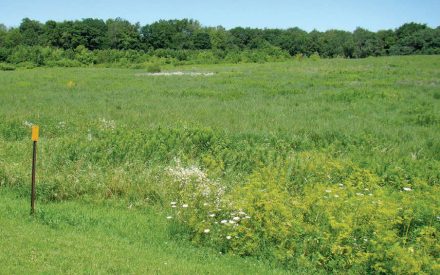
Simple steps to reduce erosion include planting cover crops after corn silage, reducing the number of tillage passes, and leaving more surface residue through spring. For concentrated flow areas, a properly sized and maintained grassed waterway, at least 30 feet wide, can make a significant difference. Rows should meet waterways on the contour, not run parallel to them.
Do not overlook field edges and property boundaries. These transition zones are often the last line of defense against soil leaving your land.
Start with What You Can See
You do not need a formal conservation plan to get started. Use a simple stoplight approach: identify areas that are fine as-is, areas to address soon, and areas needing immediate attention. Then prioritize. If you are unsure where to begin, a conservation specialist or fellow farmer can help.
This resource is meant for print purposes, only.