This study was conducted from 2002-2008 and may no longer reflect current conditions as weather, management practices, and available data have evolved. This research remains valid, but should be considered alongside more recent findings.
Farming on steep, hilly land is tough. Keeping soil and nutrients out of nearby streams is even tougher. But data from Bragger Family Dairy in Buffalo County, Wisconsin shows it can be done, and the lessons from this farm still matter today.
Starting in 2002, the Discovery Farms Program monitored two streams on the Bragger farm for seven years. The goal was simple: find out how farming affects water quality and what practices actually work in this area of Wisconsin. The results gave farmers and policymakers real numbers from a real farm, not just models or lab studies.
What the Study Looked At
Researchers compared two watersheds on the same farm. The north site had more cropland, including corn and alfalfa close to the stream. The south site was mostly pasture and woodland, with fewer cropped acres. Comparing the two helped isolate the effect of farming on water quality, since weather and soil type were the same at both locations.
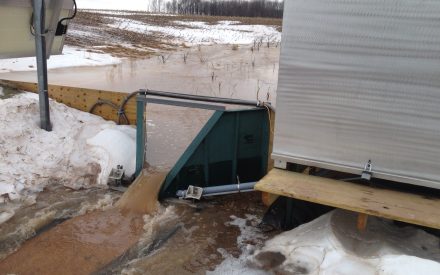
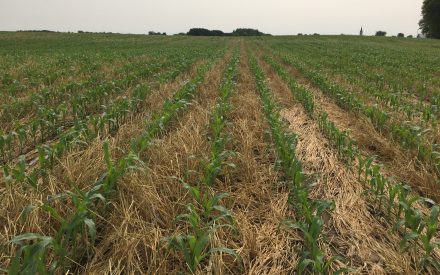
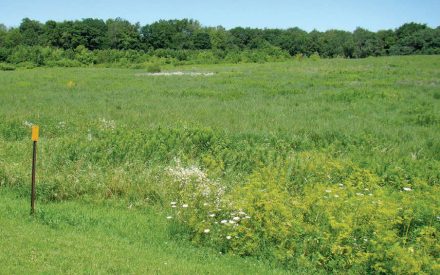
They measured soil loss, phosphorus, nitrogen, and water flow throughout the study. The farm used four conservation practices during this time: grade stabilization structures (dams built to slow water and trap sediment), grassed waterways (channels that move runoff safely away from fields), no-till planting, and cover crops.
What They Found
The biggest takeaway: there is no such thing as zero loss. Both the farmed and the non-farmed watersheds lost soil, phosphorus, and nitrogen. But the amount of loss and the timing depended a lot on what was happening on the land.
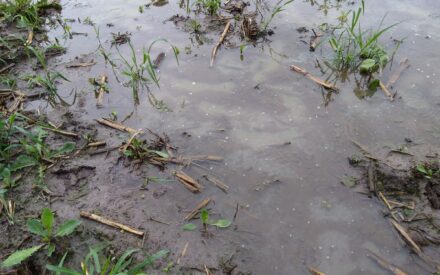
May and June were the riskiest months. Spring-planted crops had not yet developed a full canopy to protect the soil, leaving it exposed to heavy rain. In fact, just two storms in June 2002 and June 2004 accounted for more than half of all soil lost during the entire six-year study. Both storms dropped 3.2 to 3.4 inches of rain at 1 to 2.5 inches per hour.
By contrast, a storm of similar intensity in August 2007 caused far less damage because crops were fully grown and shielded the soil from raindrop impact.
Manure timing also mattered. Manure was applied dozens of times over the study period, but only one application showed a clear impact on water quality. This application was made right before a storm that triggered runoff from the field. Careful attention to weather forecasts and field conditions can make a big difference.
A grade stabilization structure installed in 2005 reduced sediment concentrations in nearby waterways by 73%. Nitrogen levels in the stream also trended downward over time, showing that consistent nutrient management pays off.
The Bottom Line
Both streams stayed below Wisconsin’s phosphorus water quality standards throughout the study. Good farming and good water quality went hand in hand at Bragger Family Dairy. The evidence points to a clear window of vulnerability in late spring, and a clear set of tools that help manage that risk: cover crops, no-till, waterways, and carefully timed manure applications.
Explore This Study in More Detail
This resource is meant for print purposes, only.
Lessons Learned from Bragger Family Dairy (PDF) ↗️