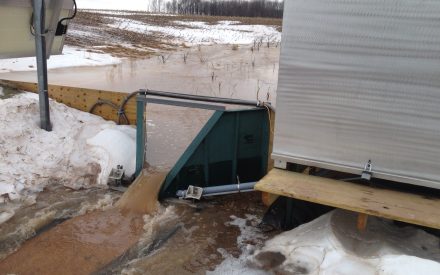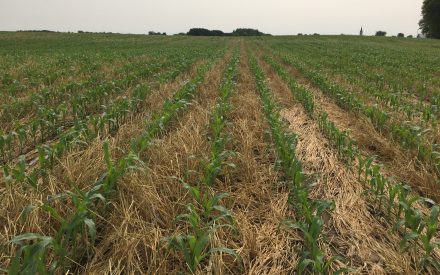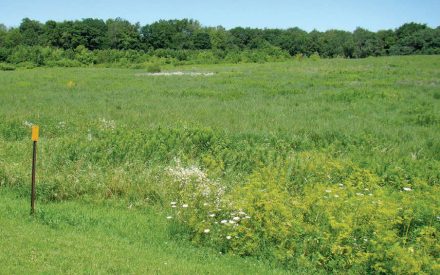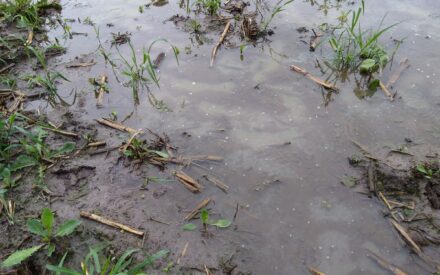
Whether your farm already has tile or it’s a practice you’re considering, it’s important to understand the opportunities and challenges of tile drainage. These underground pipe systems remove excess water from poorly drained soils, helping you get into the field on time, improve yields, and reduce soil compaction and erosion. However, tile drainage also comes with responsibility. Without proper management, these systems can carry nitrogen, phosphorus, and even manure directly into local waterways.
Know Your System
The first step is knowing where your tiles are. Records are often incomplete or missing, especially on older farms. Fortunately, there are practical ways to find them. Shortly after spring frost, drained soils dry faster than surrounding areas, showing up as lighter-colored strips that can be spotted from the field or through free tools like Google Earth. You can also look for aboveground clues: orange or white air vent pipes, surface water inlets in low spots, and tile outlets along drainage ditches.
Crop and weed patterns can tell you a lot too. Corn over tile lines often shows a deeper green color during wet, cool Junes. Soybeans may flower up to a week earlier over tiles. In fields with foxtail, the weed tends to disappear over tile lines since it favors compacted, wet soil. Once you locate your tiles, map them and keep those records somewhere safe.
Inspect Every Year
Annual inspections are essential to ensure tile systems continue working as intended. Early spring during snowmelt or after heavy rains are good times for inspection. Check that rodent guards at tile outlets are in place and clear. Look for blowouts, which are sinkholes that form when soil is pulled into a cracked or broken tile. These can range from a few inches to several feet across. Left unrepaired, they can allow sediment, manure, fertilizer, and chemicals to enter your drainage system. Always call Diggers Hotline at 1-800-242-8511 before any digging. Also check for iron ochre, a red or tan bacterial buildup that can block tile flow and is most common in sandy or muck soils.
Manage Nutrients Carefully
Tile drainage reduces surface runoff, but that means more water moves through the soil profile, carrying nitrogen and phosphorus with it. Once those nutrients reach a tile, they go straight to surface water.
Preferential flow paths (meaning channels through the soil created by earthworm burrows, root decay, and shrinkage cracks) speed up this process. This is especially true in long-term no-till fields and high clay-content soils. Earthworm populations in no-till fields can be roughly twice those in tilled fields, and burrows within two feet of a tile line can drain directly to the outlet.
When applying liquid manure, timing and conditions matter. Do not apply when tiles are actively flowing or when heavy rain is in the forecast. Manure can reach tile drains days or even weeks after application. Pre-tilling before injection can help break up preferential flow paths and reduce the risk of manure reaching your tile. Manure with less than 2% solids moves through the soil most easily and poses the highest risk.
The bottom line is this: the best way to protect water quality on tile-drained land is to prevent nutrients from reaching the tile in the first place.
Explore This Topic in More Detail
This resource is meant for print purposes, only.
Tile Drainage in Wisconsin (PDF) ↗️