This study was conducted from 2003-2008 and may no longer reflect current conditions as weather, management practices, and available data have evolved. This research remains valid, but should be considered alongside more recent findings.
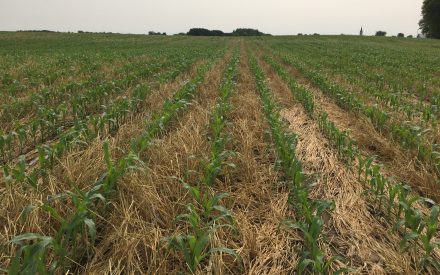
At the time Discovery Farms began monitoring at Pagel’s Ponderosa Dairy (PPD) in Kewaunee County, Wisconsin in 2003, it was a large confined dairy operation with about 1,400 milking cows. The farm managed 1,600 acres of cropland, grew corn and alfalfa silage, and applied liquid manure under a nutrient management plan. From 2003 to 2008, researchers monitored both surface runoff and tile drainage at multiple field sites to understand how this farming system affected water quality on the fine-textured red clay soils common to northeastern Wisconsin.
Spring Was the Riskiest Season
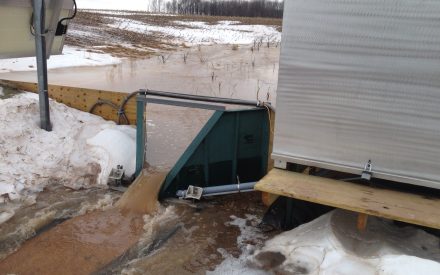
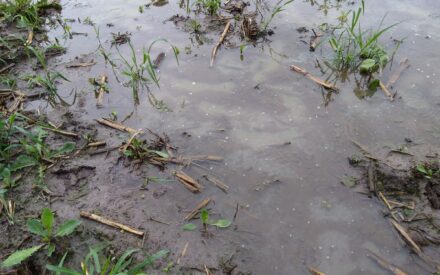
Over five years of surface monitoring and four years of tile monitoring, March consistently had the highest water losses from both surface runoff and tile drainage. March alone accounted for half of all surface runoff measured across the five-year period. Rain falling on frozen or snow-covered ground, combined with snowmelt, drove much of this. On average, 60 percent of all surface runoff occurred during frozen ground conditions, and 56 percent of all tile flow also occurred during frozen ground. January was the second highest tile flow month, occurring when the ground is almost always frozen.
That pattern matters for manure management. When the farm applied a small amount of manure on ice-crusted soil in late 2004 and made an additional trial application on frozen, snow-covered ground at the request of researchers, elevated nutrient losses followed. For the rest of the monitoring period, no further applications were made on frozen or snow-covered ground in the monitored areas, and the farm shifted later-season manure applications to cooler soil conditions to slow nitrogen conversion.
Tile Drainage Dominated Nitrogen Loss
One of the most striking findings was how differently phosphorus and nitrogen behaved. Surface runoff carried 66 percent of total phosphorus loss, with tile accounting for the remaining 34 percent. Nitrogen loss was nearly the reverse: tile drainage was responsible for 82 percent of total nitrogen loss, with surface runoff contributing just 18 percent. Tile nitrogen loss averaged 62 pounds per acre per year, compared to 13 pounds per acre from surface runoff. Nitrate, the form of nitrogen most likely to travel through tile, made up 93 percent of tile nitrogen losses.
Single Storms Drove Most Annual Loss
As at other Discovery Farms sites, a small number of storms accounted for the majority of annual losses. A single storm in surface runoff could deliver over 90 percent of the year’s sediment loss and up to 80 percent of total phosphorus and nitrogen loss. The timing of these events, typically March snowmelt or heavy May and June rains on wet soils, was consistent across multiple years.
The study also confirmed that neither nutrient concentration alone nor water volume alone can predict how much loss actually occurs. Both have to be measured together to get an accurate picture of what is leaving your fields.
Explore This Study in More Detail
This resource is meant for print purposes, only.
Understanding Nutrient and Sediment Loss at Pagel’s Ponderosa Dairy (PDF) ↗️