This study was conducted from 2005-2009 and may no longer reflect current conditions as weather, management practices, and available data have evolved. This research remains valid, but should be considered alongside more recent findings.
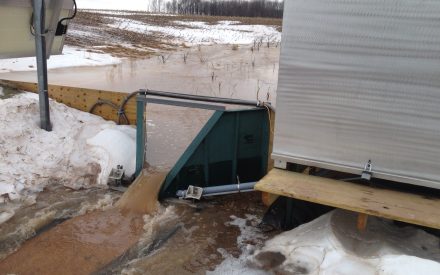
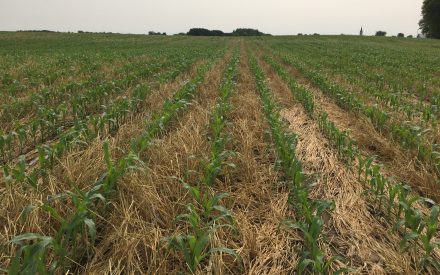
Koepke Farms, Inc. near Oconomowoc, Wisconsin has been farming for over 75 years and was one of the first operations in their area to go 100% no-till. They grow corn, soybeans, winter wheat, and alfalfa on about 1,000 acres and surface apply semi-solid dairy manure to corn ground throughout the year. From 2005 to 2009, Discovery Farms and the U.S. Geological Survey monitored both surface runoff and tile drainage on two fields to measure how this system affects soil, phosphorus, and nitrogen loss.
What the Water Data Showed
The farm sits on soils with a seasonally high water table, and that turned out to be one of the study’s most important findings. Tile lines on this farm do not just drain rainfall that soaks in from above. They also intercept lateral groundwater moving in from surrounding areas. This means the tiles ran almost continuously once the ground thawed in March 2006, and kept flowing through summer.
For the surface runoff site, the no-till system performed well. Average annual surface soil loss was 172 pounds per acre, which is low. The reason: no-till keeps crop residue on the surface, improves soil structure, and allows water to infiltrate quickly rather than run off. On this farm, surface runoff almost never happened unless the tile lines were already flowing at or near capacity.
Soil Moisture Was the Key to Runoff Risk
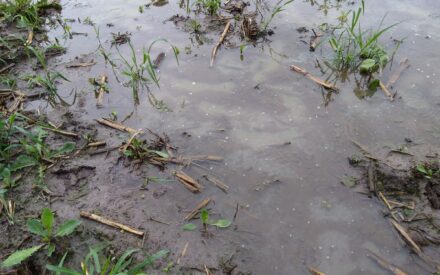
Researchers tracked soil moisture continuously throughout the study. Of all rain events on non-frozen ground, only 15% produced any surface runoff. Runoff never occurred when soils were dry. When soils were at medium moisture levels, runoff happened just 5% of the time. When soils were at high moisture, it happened 29% of the time. This data gives farmers a practical tool: knowing your soil moisture before a rain event tells you a great deal about your runoff risk, and therefore your risk of nutrient loss from a manure or fertilizer application.
Single Storms Did Most of the Damage
A small number of storms drove the majority of annual losses. In one year, a single storm accounted for nearly 90% of total surface sediment loss for the entire field year. Over 80% of total phosphorus loss in surface runoff came from a single storm in another year. Manure applications that occurred close to a runoff event amplified those losses significantly. A manure application in March 2008 shortly before a runoff event resulted in the highest nitrogen loss recorded during the study.
In response to the monitoring results, the Koepkes built manure storage in 2008 to give themselves more flexibility to avoid spreading on frozen ground or when soils were saturated.
Explore This Study in More Detail
This resource is meant for print purposes, only.
Understanding Nutrient and Sediment Loss at Koepke Farms, Inc (PDF) ↗️