This study was conducted from 2003-2010 and may no longer reflect current conditions as weather, management practices, and available data have evolved. This research remains valid, but should be considered alongside more recent findings.
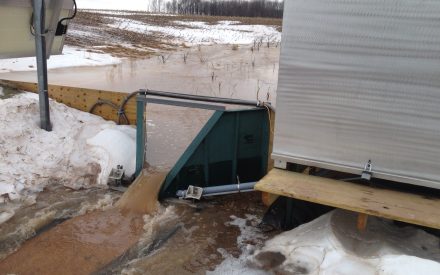
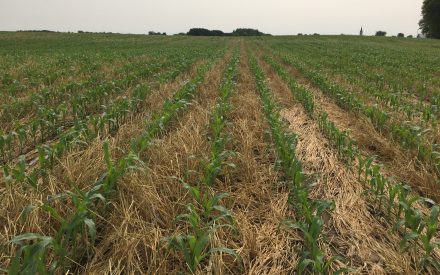
Riechers Beef near Darlington, Wisconsin has been farming the same ground for generations. The Riechers Family finish beef steers and grow corn and soybeans on about 750 acres of Tama silt loam, one of the most productive soils in Lafayette County. Every acre is farmed no-till, with solid beef manure surface applied based on crop needs. From 2003 to 2010, Discovery Farms and the U.S. Geological Survey monitored surface runoff from three field watersheds to measure how this system affects soil, phosphorus, and nitrogen loss.
A No-Till System That Outperformed State Averages
The numbers told a clear story. Riechers Beef performed well across every measured category. Annual surface runoff was 2.2 inches. Sediment loss averaged 163 pounds per acre per year. Total phosphorus loss averaged 1.8 pounds per acre, and total nitrogen loss was 4.2 pounds per acre.
Only 6% of all precipitation left the field as surface runoff over seven years, and only 20% of that runoff happened during the non-frozen season. The reason for the low non-frozen ground losses was straightforward: the no-till system keeps 50 to 65% of the soil surface covered with residue, improves soil structure through years of organic matter buildup, and allows water to infiltrate rapidly through well-developed macropores.
Winter Runoff Was the Critical Window
Despite the strong overall performance, 80% of all runoff occurred during frozen ground conditions, nearly all of it in February and March. That same timing drove 80% of all phosphorus and nitrogen losses. The no-till system’s advantages largely disappear during snowmelt because frozen soil cannot infiltrate water the way thawed, soil can.
Manure application timing made a dramatic difference in those critical months. In three of the seven years studied, manure was applied shortly before a winter runoff event. In each of those years, phosphorus losses were two to five times higher in the fields that received the pre-runoff application compared to fields that did not. In years when manure was applied weeks or months before any runoff occurred, losses were well within acceptable levels even though soil test phosphorus levels on this farm were excessively high.
Soil Moisture as a Practical Tool
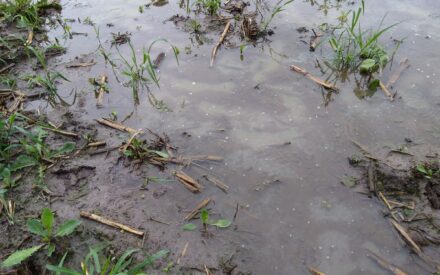
The study also documented a practical rule of thumb for non-frozen ground: 71% of all non-frozen runoff occurred when antecedent soil moisture was above 35%. When soils were drier, even large storms rarely produced runoff. Tracking soil moisture before spreading is a reliable way to assess your runoff risk before committing to an application.
Explore This Study in More Detail
These resources are meant for print purposes, only.
Understanding Nutrient and Sediment Loss at Riechers Beef (PDF) ↗️